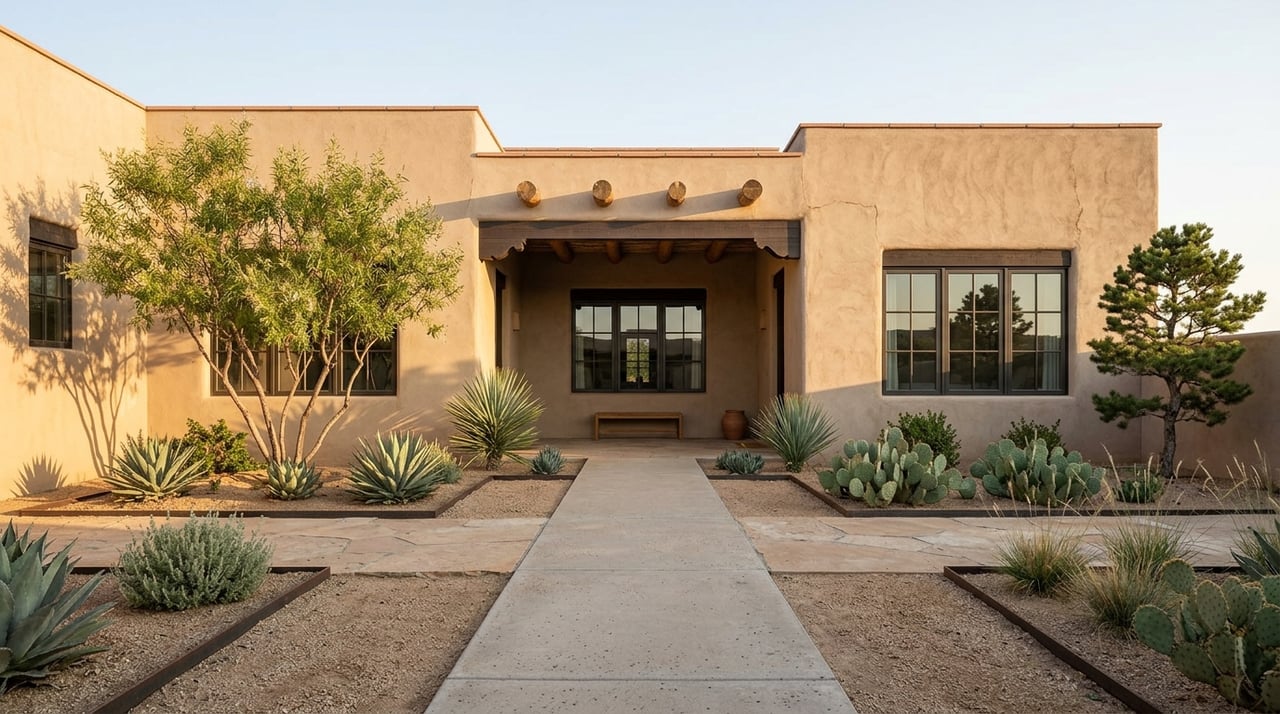
What It’s Like To Live In Corrales And Placitas Year‑Round
June 18, 2026
June 18, 2026
If you are drawn to open space, mountain views, and a quieter pace, Corrales and Placitas can both stand out right away. They share a semi-rural feel, strong homeowner stability, and room to breathe, but living in each place year-round feels a little different in practice. If you are trying to decide which lifestyle fits you best, this guide will walk you through the daily atmosphere, housing patterns, commute realities, and practical tradeoffs that shape life in both communities. Let’s dive in.
Corrales is an incorporated village with an estimated population of 8,530 in 2024. Placitas is an unincorporated region of Sandoval County with a population of 5,041 in the 2020 Census. Both communities are predominantly owner occupied, have median household incomes above $100,000, and show strong residential stability.
There are also a few meaningful differences. Placitas has an older population profile, with 49.5% of residents age 65 and older, compared with 37.5% in Corrales. In day-to-day terms, Corrales often feels more like a small village with its own civic structure, while Placitas feels more like a broad high-desert community shaped by county services and local volunteer groups.
Corrales offers a more formal small-town structure than many semi-rural communities. The village has its own departments for fire, police, public works, parks and recreation, planning and zoning, along with a community events calendar and library. That gives daily life a more defined civic rhythm throughout the year.
The community identity also runs deep. Local pages highlight art, culture, history, nature, and an equestrian-friendly pace, along with events like the month-long Viva Corrales celebration. If you want a place that feels active without feeling busy, Corrales often lands in that sweet spot.
One of Corrales’ biggest lifestyle draws is the Bosque Preserve. This riparian cottonwood habitat supports walking, hiking, horseback riding, biking, fishing, and bird habitat, which means nature is not just nearby, it is woven into everyday routines.
For many residents, that shapes the cadence of the day. Morning walks, evening rides, and regular time outdoors can feel normal here. The preserve does not offer visitor amenities, so planning ahead is part of the experience.
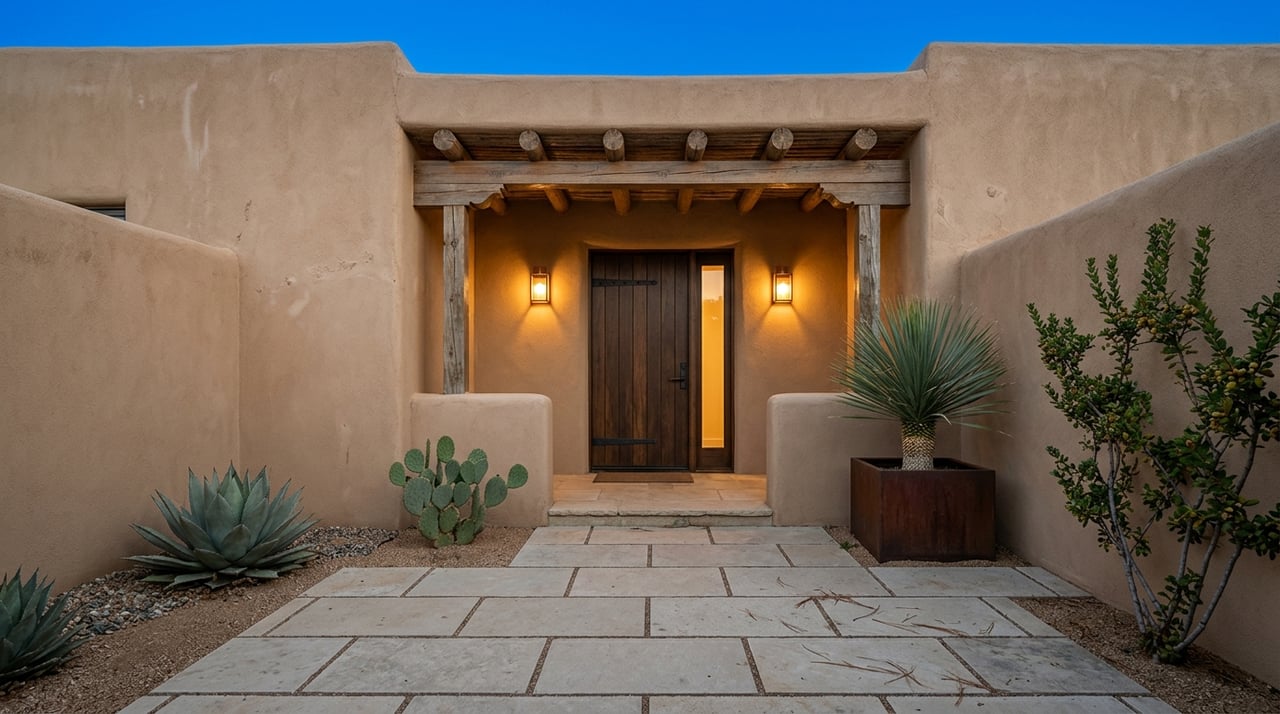
Corrales has a strong historic and agricultural identity, and that shows up in how the village has grown. Historical context in village materials points to long narrow land strips tied to irrigation, family clusters, and traditional building methods using adobe, mud, timbers, and terrones.
That heritage still influences modern development. Village rules protect historic buildings and consider how changes affect materials, architectural style, siting, open space, landscaping, and views toward the Sandia Mountains and western sandhills. If you value a place where the built environment is shaped carefully, Corrales offers that consistency.
Corrales is low density by design. Most properties do not have municipal water or sewer service, so homes and businesses generally rely on wells and septic systems, and the village uses a one-dwelling-per-acre rule to help protect water quality.
That setup can be a great fit if you want privacy, land, and a more self-reliant lifestyle. It also means year-round living comes with more hands-on awareness of your property systems than you might expect in a typical subdivision. Buyers who appreciate that tradeoff often find Corrales especially appealing.
Corrales combines a quieter setting with practical access to the broader metro area. Census data shows a mean travel time to work of 29.2 minutes, and broadband subscription rates are high at 89.8%.
That combination helps explain why the village can work well for hybrid and remote routines. You can have more space and a slower daily pace while still staying connected for work and regional errands. Travel patterns tend to revolve around village roads and Corrales Road, also known as NM 448.
Placitas offers a different kind of year-round lifestyle. Because it is an unincorporated Sandoval County region, the community character is shaped less by a village government and more by county planning, local organizations, and volunteer-led institutions.
That gives Placitas a broad, open, high-desert feel. Community life is supported by places and groups like the Placitas Community Library, the senior center, PACE, Las Placitas Association, and Jardineros. If you like the idea of a place where local involvement helps carry the social fabric, Placitas can feel deeply connected.
Placitas is strongly tied to natural scenery and stewardship of land. The Placitas Open Space is managed for low-impact recreation, and Las Placitas Association sponsors free hikes and activities connected to the area’s natural and cultural heritage.
That means the landscape is not just something you look at from your window. It often becomes part of how you spend your week. For year-round residents, that can make life in Placitas feel grounded, spacious, and closely connected to the outdoors.
Placitas has a broader mix of housing patterns than some buyers expect. In formal subdivisions, county planning documents describe one-acre lots, large single-family homes, guest homes, home occupations, and southwestern or pueblo-style design with earth-toned exteriors.
In older Las Placitas areas, the pattern shifts. There, you can find smaller lots, clustered housing, farm plots along acequias, and a mix that may include adobe homes, mobile homes, and dome structures. This variety is part of what gives Placitas its lived-in rural character.
Placitas planning puts strong emphasis on protecting natural views and view-sheds. That helps explain why custom view properties and ridge-top settings are such a defining part of the area’s appeal.
At the same time, Placitas is still described as a large-lot, single-family, semi-rural place rather than a dense suburban one. If your idea of home includes visual openness and separation from denser development, Placitas is built around that experience.
Placitas may feel more open, but it still requires practical planning. County documents note that water availability varies across the area, many properties rely on single-lot wells or shared wells, and most homes use conventional septic systems, with some smaller lots needing more advanced systems.
In other words, daily living often includes more property-level responsibility than in a fully serviced neighborhood. For some buyers, that is a drawback. For others, it is simply part of the independence that makes Placitas attractive.
Placitas is closely shaped by its transportation corridors. Sandoval County identifies NM 165 as the backbone of the area and notes congestion at I-25, NM 165, and US 550 as a major transportation issue.
Census data reports a mean travel time to work of 31.4 minutes, and broadband subscription is high at 93.7%. That makes Placitas workable for remote and hybrid schedules, but if you commute regularly, your routine will likely depend heavily on driving and planning around I-25 access.
Both communities offer space, owner stability, and a semi-rural setting with strong appeal for year-round residents. Corrales has 91.2% owner-occupied housing, a median owner value of $571,500, and a median household income of $102,307. Placitas has 93.9% owner-occupied housing, a median owner value of $562,100, and a median household income of $109,750.
The bigger distinction is lifestyle structure. Corrales often feels more village-centered, with municipal services, preserved historic character, and routines tied to local roads and the bosque. Placitas often feels more expansive and self-directed, with county-based services, volunteer-led community life, and stronger dependence on regional driving routes.
In both Corrales and Placitas, the appeal is real. You get more space, stronger visual connection to the landscape, and a community feel that can be hard to find in denser suburban areas. You also gain access to places where homeownership often feels more rooted and long term.
The tradeoff is just as important to understand. Year-round living in either place usually means more driving, more attention to water and septic systems, and more homeowner self-sufficiency than you would expect in a fully served subdivision. For many buyers, that is not a negative, it is simply part of the lifestyle choice.
If you are weighing Corrales against Placitas, the right move often comes down to how you want your daily life to feel. If you want help comparing properties, land features, and the practical details that matter most, K2 Omni Group can help you navigate your options with a polished, white-glove approach.
August 20, 2026
August 13, 2026
August 13, 2026
August 6, 2026
July 23, 2026
July 16, 2026
July 9, 2026
July 2, 2026
June 25, 2026
If you are looking for a real estate company that is committed to providing its clients with the best possible experience, look no further than K2 Omni Pindrop. Contact us today to learn more!
K2 OmnI Group
Roanoke TX 76262